The Complete PMI-PBA Guide: Master Business Analysis Certification in 2026
1. Introduction: The Strategic Value of Business Analysis
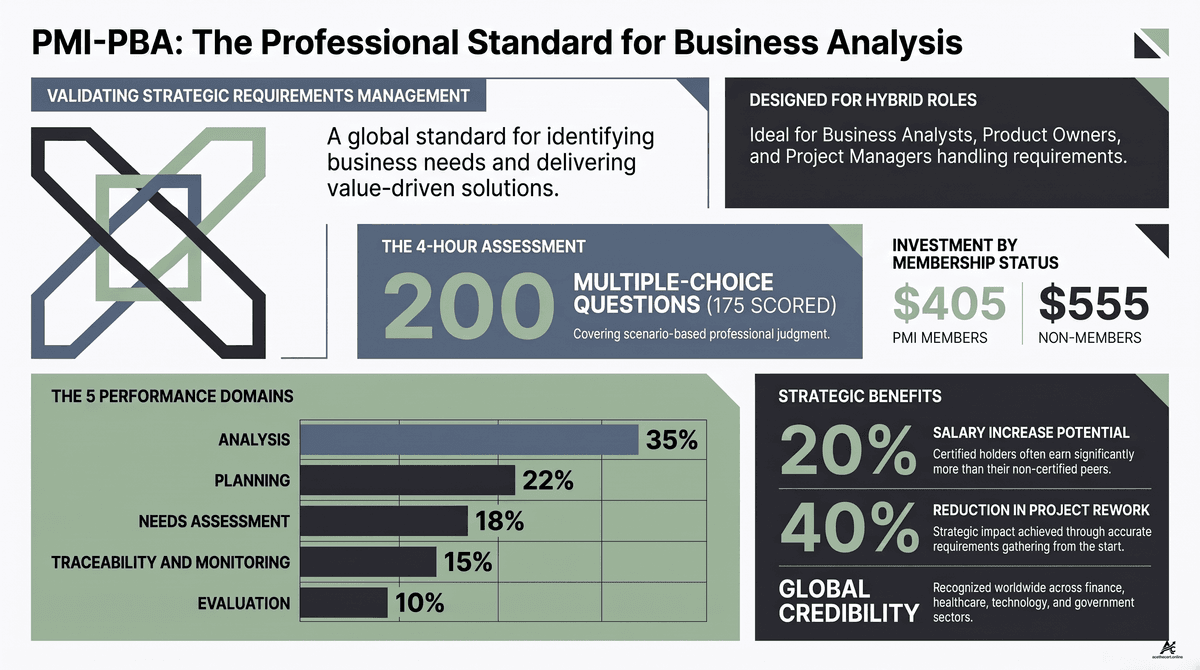
In high-stakes project delivery, the distinction between organizational success and failure is determined long before the first line of code is written. The PMI Professional in Business Analysis (PMI-PBA) validates your expertise at the strategic intersection of project delivery and organizational value, addressing the primary driver of project failure: inaccurate requirements and flawed front-end analysis.
Test your BA mastery: Domain 1: Needs Assessment | Domain 2: Planning | Domain 3: Analysis | Domain 4: Traceability and Monitoring | Domain 5: Evaluation.
2. Who Should Pursue the PMI-PBA?
This credential serves as a career-defining strategic asset for:
- Business Analysts: Specialists in requirements elicitation, modeling, and enterprise value.
- Product Owners: Responsible for backlog optimization and product-market fit.
- Project Managers: Particularly those in “hybrid” roles managing significant requirements.
- Systems Analysts: Translating complex business logic into technical specifications.
The PMI-PBA is methodologically neutral — effective across Waterfall, Agile, and Hybrid environments.
3. Eligibility Pathways
| Criteria | Secondary Degree | Bachelor’s Degree | GAC-Accredited Degree |
|---|---|---|---|
| BA Experience (Last 8 Years) | 60 months | 36 months | 24 months |
| BA Education Hours | 35 contact hours | 35 contact hours | 35 contact hours |
| Project Team Hours | 2,000 hours | 2,000 hours | Waived |
Strategic Waivers: Project hours are waived for active PMP® or PgMP® holders.
4. The Five Domains of Business Analysis
| Domain | Weight | Core Activities |
|---|---|---|
| Needs Assessment | 18% | Root cause analysis (Ishikawa, 5 Whys), SWOT analysis, business case justification. Quiz → |
| Planning | 22% | Requirements management plan, governance, change control, communication matrices. Quiz → |
| Analysis | 35% | Elicitation, modeling, specification. Use Cases, State Diagrams (Waterfall) vs. User Stories, Backlog Refinement (Agile). Quiz → |
| Traceability and Monitoring | 15% | Requirements Traceability Matrix (RTM), status tracking, baseline integrity. Quiz → |
| Evaluation | 10% | Solution validation, KPI measurement, post-implementation reviews. Quiz → |
5. Exam Structure
- 200 questions (175 scored, 25 pretest)
- 4 hours duration
- Available in 6 languages
- Psychometric scoring; no fixed passing score
- Cost: $405 (members) / $555 (non-members)
6. Key Tools and Techniques to Master
- Root Cause Analysis: Ishikawa (fishbone) diagrams, 5 Whys.
- SWOT Analysis: Strengths, Weaknesses, Opportunities, Threats.
- Requirements Traceability Matrix (RTM): Bi-directional linking from need to solution.
- Use Cases and User Stories: Elicitation artifacts for Waterfall and Agile.
- MoSCoW Prioritization: Must have, Should have, Could have, Won’t have.
7. Study Timeline and Resources
Plan for 2–3 months of preparation:
- PMI Guide to Business Analysis: The foundational reference.
- PMBOK® Guide 8th Edition: Requirements management integration.
- PMI-PBA Practice Exams: Full-length, scenario-based simulations.
- Target Benchmark: Consistent 70%+ on practice tests.
8. PMI-PBA vs. IIBA CBAP
- PMI-PBA: Project-centric, integrates BA with the project management life cycle. Rooted in the PMI Guide to Business Analysis.
- IIBA CBAP: Profession-centric, follows the BABOK® Guide. Focuses on standalone enterprise analysis independent of project structure.
9. Career Impact and Salary
PMI-PBA holders are positioned for senior lead, product owner, and strategic consultant roles. The certification typically commands a 10–20% salary premium, particularly in Banking, IT, Healthcare, and Government sectors.
10. Renewal and Maintenance
- 60 PDUs every 3 years.
- Minimum 35 Education PDUs across the PMI Talent Triangle.
- Maximum 25 Giving Back PDUs (volunteering, mentoring).
11. Your Path to PMI-PBA Certification
- Acquire Training: Complete 35 contact hours of verified BA education.
- Submit Application: Document experience within the 8-year window.
- Prepare for Audit: Keep education certificates and experience verification ready.
- Study the Five Domains: Focus heavily on Analysis (35%) and Planning (22%).
- Take Mock Exams: Target 70%+ consistency.
- Pass the Exam: Join the elite tier of certified business analysis professionals.
Frequently Asked Questions
What is the PMI-PBA certification?
What are the PMI-PBA eligibility requirements?
What are the 5 PMI-PBA domains?
How much does the PMI-PBA exam cost?
How do I maintain my PMI-PBA?
Ace The Cert Team
The official editorial team for Ace The Cert.
Related Posts
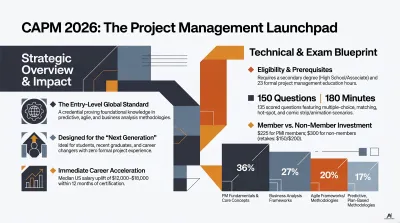
The Ultimate 2026 CAPM Certification Guide: Your Gateway to Project Management
Pass the CAPM exam on your first try. Learn eligibility, costs, the 4 domains, study roadmap, and career paths for aspiring project managers in 2026.
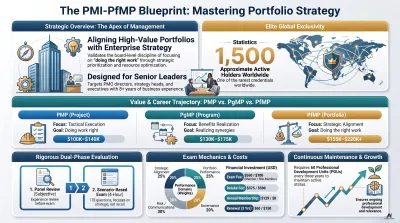
The Complete PfMP Guide: Master Portfolio Management Professional Certification in 2026
Earn the PfMP and master portfolio management. Learn eligibility, 5 domains, panel review process, and proven strategies to pass the PfMP exam on your first try.
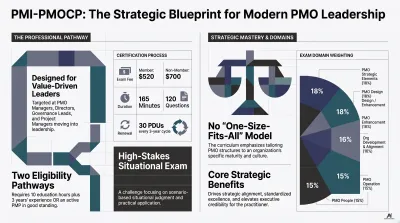
The Complete PMI-PMOCP Guide: Master PMO Professional Certification in 2026
Lead strategic PMOs. Master the PMI-PMOCP with our guide to eligibility, 6 domains, PMO Value Ring, exam structure, and proven prep strategies for 2026.
Comments are not configured for this site.