The Complete PMI-SP Guide: Master Scheduling Professional Certification in 2026
1. Introduction: Why Scheduling Expertise Matters
In 2026, projects face tighter timelines, distributed teams, and AI-augmented planning tools. The PMI Scheduling Professional (PMI-SP) certification validates your specialized ability to create realistic, maintainable, and resilient project schedules. As a certified SP, you prove mastery of critical path analysis, earned value management, and schedule risk mitigation.
Test your scheduling knowledge: Domain 1: Schedule Strategy | Domain 2: Schedule Planning | Domain 3: Schedule Monitoring | Domain 4: Schedule Closeout | Domain 5: Stakeholder Communication.
2. The Role of a Scheduling Professional
A PMI-SP is not merely a “scheduler.” You are a strategic planner who:
- Translates the project scope and WBS into a realistic timeline.
- Identifies and manages the critical path and near-critical paths.
- Applies resource loading and leveling to optimize resource utilization.
- Performs schedule risk analysis using Monte Carlo simulation.
- Communicates schedule status, forecasts, and corrective actions to stakeholders.
3. Eligibility Requirements
- 4-Year Degree Path: 30 months of unique project scheduling experience in the last 5 years + 30 hours of scheduling education.
- Secondary Degree Path: 40 months of scheduling experience + 30 hours of education.
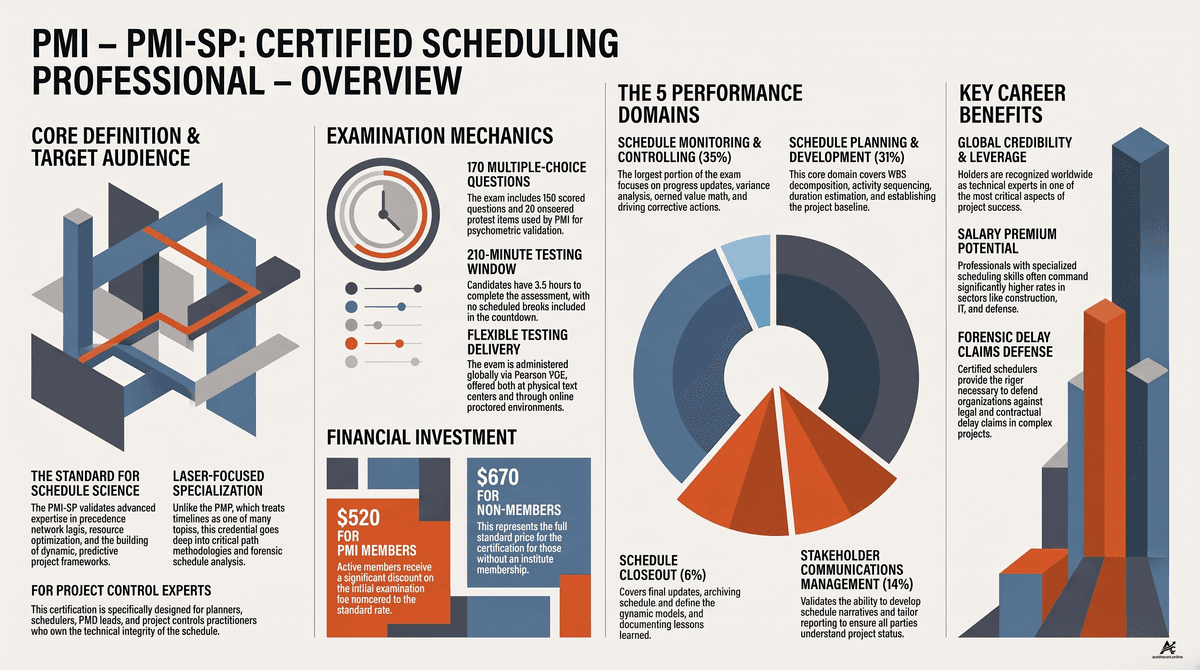
4. The Five Scheduling Domains
| Domain | Weight | Core Activities |
|---|---|---|
| Schedule Strategy | 14% | Establishing scheduling policies, selecting scheduling methodology, defining schedule governance. Quiz → |
| Schedule Planning and Development | 31% | Creating the WBS, defining activities, sequencing, estimating durations, developing the schedule baseline. Quiz → |
| Schedule Monitoring and Controlling | 35% | Tracking progress, calculating EVM metrics (SPI, SV), variance analysis, change control, schedule compression. Quiz → |
| Schedule Closeout | 10% | Finalizing schedule artifacts, documenting lessons learned, archiving schedule data. Quiz → |
| Stakeholder Communication | 10% | Tailoring schedule reports, presenting schedule forecasts, managing stakeholder expectations. Quiz → |
5. Exam Structure
- 115 questions (100 scored, 15 pretest)
- 2.5 hours duration
- Psychometric scoring
- Heavy emphasis on computational questions (CPM, EVM, PERT)
6. Key Techniques to Master
Critical Path Method (CPM)
- Forward pass: Calculate Early Start (ES) and Early Finish (EF).
- Backward pass: Calculate Late Start (LS) and Late Finish (LF).
- Total Float = LF – EF = LS – ES.
- Free Float = Earliest ES of successors – EF of current activity.
- The critical path has zero total float.
Earned Value Management (EVM)
- SV = EV – PV (Schedule Variance)
- SPI = EV ÷ PV (Schedule Performance Index)
- SV% = SV ÷ PV (Schedule Variance Percentage)
Schedule Compression
- Crashing: Adding resources to critical path activities (increases cost).
- Fast-Tracking: Performing activities in parallel that were planned sequentially (increases risk).
7. Study Timeline and Resources
Plan for 8–12 weeks of focused preparation:
- PMI Practice Standard for Scheduling (3rd Edition): The foundational reference.
- PMBOK® Guide 8th Edition: Schedule Management and EVM chapters.
- Scheduling Software Proficiency: Familiarity with Microsoft Project, Primavera P6, or equivalent.
- PMI-SP Practice Exams: Full-length simulations with computational questions.
8. Career Impact
PMI-SP holders are in high demand in Construction, Aerospace, Defense, Energy, and IT sectors with complex, multi-year projects. The certification commands a 10–15% salary premium over general project managers. Roles include Master Scheduler, Planning Manager, and Schedule Consultant.
9. Renewal and Maintenance
PMI-SP renewal requires 30 PDUs every 3 years:
- Ways of Working: Minimum 8 PDUs.
- Power Skills: Minimum 8 PDUs.
- Business Acumen: Minimum 8 PDUs.
10. Your Path to PMI-SP Certification
- Verify Eligibility: Confirm 30–40 months of scheduling experience.
- Complete 30 Hours of Education: Enroll in a scheduling-specific course.
- Master CPM and EVM: Drill the forward/backward pass and variance formulas.
- Study All Five Domains: Focus on Planning (31%) and Monitoring (35%).
- Take Mock Exams: Target 75%+, including computational accuracy.
- Pass the Exam: Become a certified scheduling professional.
Frequently Asked Questions
What is the PMI-SP certification?
What are the PMI-SP eligibility requirements?
What are the 5 PMI-SP domains?
What scheduling techniques are tested on the PMI-SP?
How do I renew my PMI-SP?
Ace The Cert Team
The official editorial team for Ace The Cert.
Related Posts
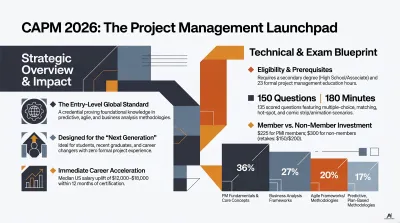
The Ultimate 2026 CAPM Certification Guide: Your Gateway to Project Management
Pass the CAPM exam on your first try. Learn eligibility, costs, the 4 domains, study roadmap, and career paths for aspiring project managers in 2026.
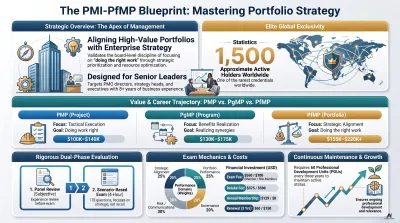
The Complete PfMP Guide: Master Portfolio Management Professional Certification in 2026
Earn the PfMP and master portfolio management. Learn eligibility, 5 domains, panel review process, and proven strategies to pass the PfMP exam on your first try.
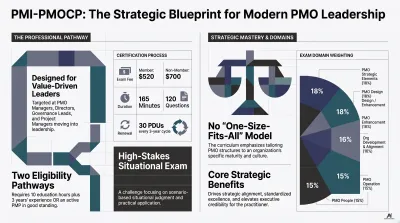
The Complete PMI-PMOCP Guide: Master PMO Professional Certification in 2026
Lead strategic PMOs. Master the PMI-PMOCP with our guide to eligibility, 6 domains, PMO Value Ring, exam structure, and proven prep strategies for 2026.
Comments are not configured for this site.